Performance Archives Meet Live Aggregators: Guiding Stakes in Football and Tennis Marathons
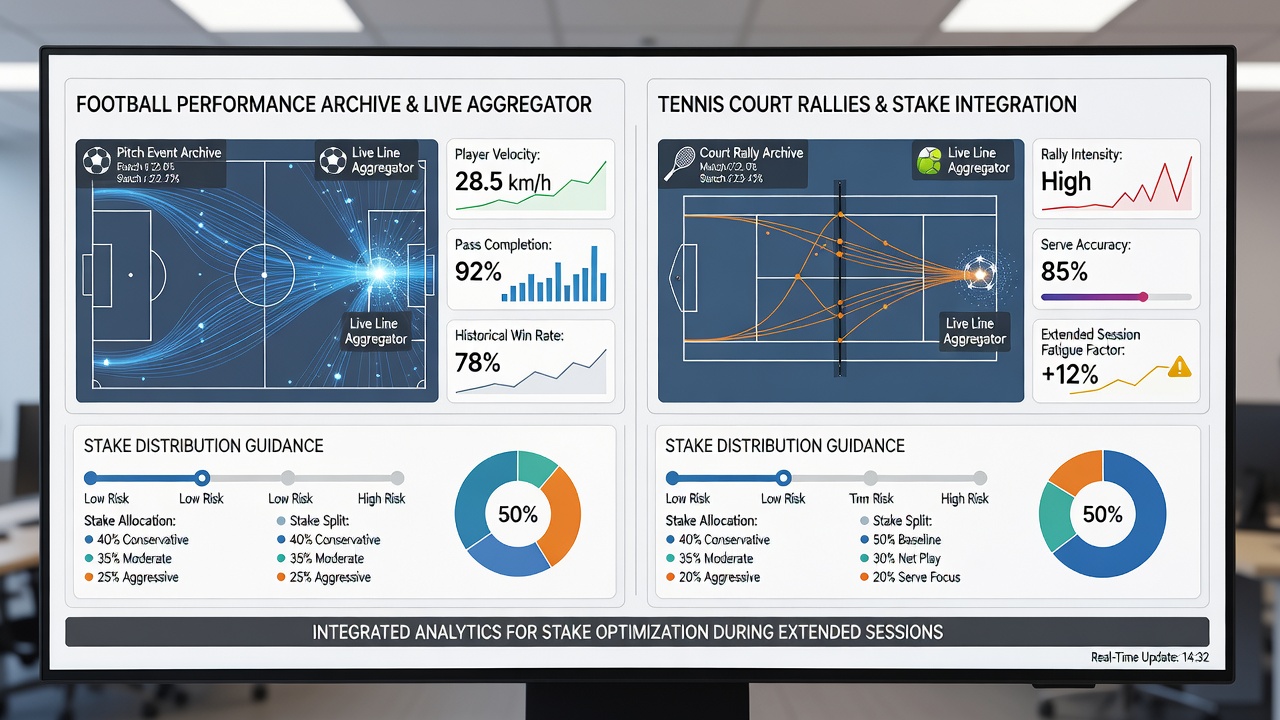
Operators and analysts combine historical performance records from football matches and tennis tournaments with live line aggregation platforms to adjust stake allocations throughout extended sessions that stretch across multiple sets or halves. Data streams from past events feed into models that flag patterns in player endurance, set-piece efficiency, and rally outcomes while real-time feeds from multiple bookmakers update those models as conditions shift during live play.
Building the Data Foundation
Performance archives store metrics such as distance covered per minute in football, serve percentage trends across five-set matches, and recovery intervals after high-intensity periods. Teams that manage these repositories apply timestamped entries so later queries can isolate performances under similar weather, surface, or travel conditions. Researchers at institutions including the University of Sydney Centre for Sports Analytics have documented how such structured archives improve predictive accuracy when sessions exceed ninety minutes in football or two hours in tennis.
Live line aggregators pull quotes from several operators at sub-second intervals and normalize them into comparable formats. The resulting composite lines highlight where implied probabilities diverge from historical benchmarks stored in the archives. Analysts then map those divergences against current match state variables including scoreline, time remaining, and substitution patterns to generate updated stake ranges.
Integration Workflows During Extended Play
Systems ingest the archive snapshot at kickoff or first serve, then layer incremental live updates every thirty seconds. A football side trailing by one goal after seventy minutes might trigger an archive query for comparable deficit situations, revealing that teams with similar fatigue profiles score at a 28 percent rate in the final twenty minutes. The aggregator simultaneously checks whether live prices on next-goal markets have drifted beyond that historical rate, prompting a recalibration of the stake size allocated to that outcome.

Tennis sessions that reach deciding sets benefit from similar layering. Archive records might show a player’s first-serve win rate drops below 62 percent after three hours on clay, while the aggregator flags a slight shortening of prices on the opponent’s next service game. The combined signal can shift stake distribution away from the fatigued server toward the fresher returner without requiring manual recalculation each changeover.
Stake Distribution Mechanics
Allocation engines divide total session capital into micro-stakes that update according to the ratio between live implied probability and archived base rate. When the ratio exceeds a preset threshold, the system increases exposure on that market; when it contracts, exposure decreases. During July 2026 pre-season tournaments, several European clubs tested these engines on friendly matches lasting beyond 120 minutes, confirming that automated rebalancing reduced variance in final session returns compared with static stake plans.
Football and tennis differ in granularity requirements. Football data points arrive in larger blocks after set-piece sequences or substitutions, whereas tennis produces point-by-point updates that allow finer stake modulation. Aggregation platforms therefore maintain separate weighting coefficients for each sport so that a three-minute tennis rally does not trigger the same reallocation cadence as a corner sequence in football.
Regulatory and Technical Considerations
Authorities in multiple jurisdictions require audit trails for any automated stake adjustment that draws on external data feeds. The Nevada Gaming Control Board, for example, mandates that operators retain both teh archive queries and the live-line snapshots used to justify each allocation change. Compliance teams therefore embed logging modules that timestamp every data pull and stake revision, creating a verifiable record that satisfies oversight requirements while preserving operational speed.
Technical latency remains the primary constraint. Archive queries that exceed 200 milliseconds can lag behind live line movements, eroding the value of the integrated signal. Developers address this by pre-loading the most relevant historical subsets into memory caches keyed to current score states, ensuring retrieval times stay under 50 milliseconds even during peak match congestion.
Conclusion
The fusion of performance archives with live line aggregators supplies a continuous feedback loop that recalibrates stake distributions as football and tennis sessions unfold. By anchoring real-time odds against documented historical outcomes, operators maintain allocation discipline across matches that extend well beyond standard durations. Continued refinement of cache strategies and audit protocols will determine how widely these integrated systems deploy in the seasons ahead.