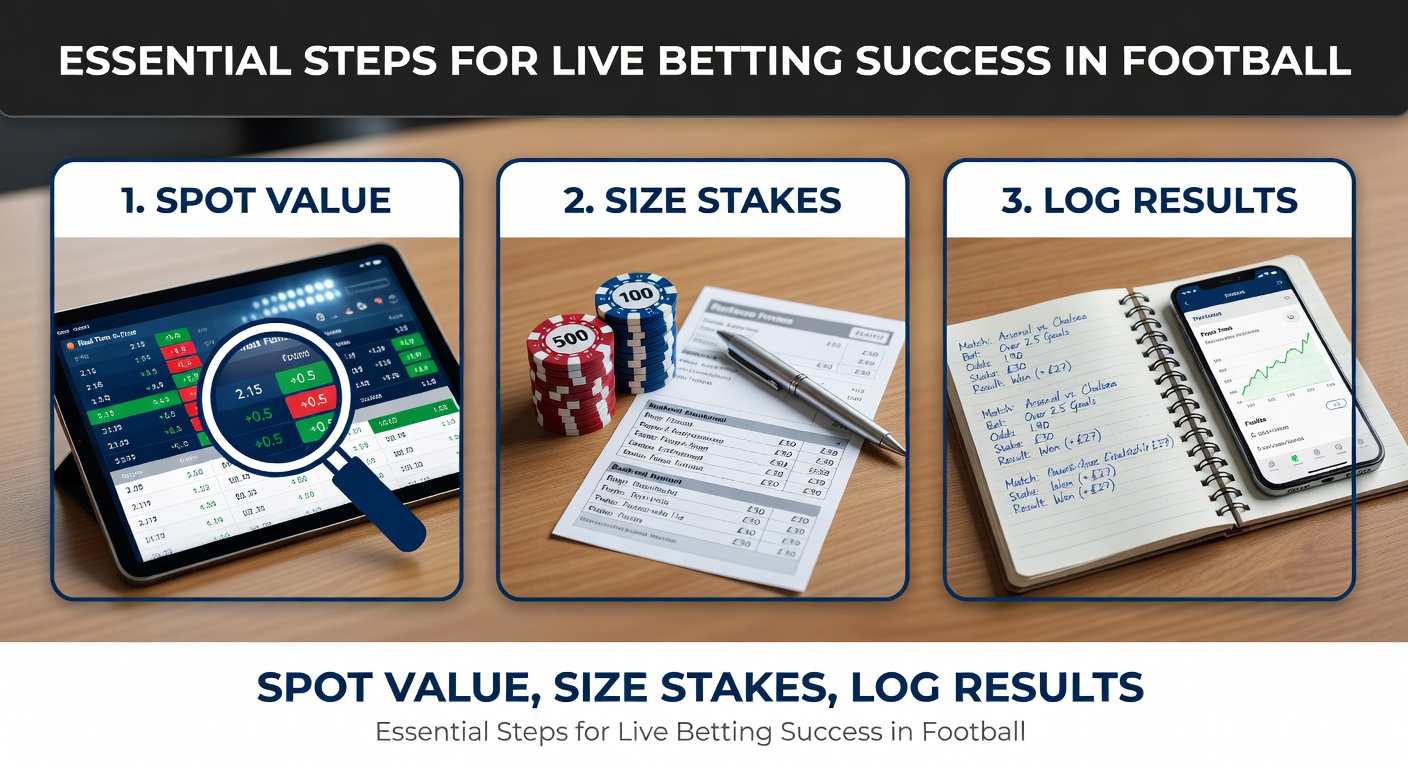
Live Football Betting Mastery: Hunt Value, Calibrate Stakes, Track Every Outcome
Navigating the Chaos: Why Value Spotting Defines Live Football Edges
Live football betting thrives on rapid shifts; odds fluctuate with every pass, tackle, or missed shot, creating fleeting opportunities those who spot value seize quickly. Value emerges when a bookmaker's offered odds imply a lower probability of an outcome than what data and real-time events suggest actually occurs, turning the pitch's unpredictability into calculated advantages. Observers note how expert bettors scan multiple platforms simultaneously, comparing lines across books to pinpoint discrepancies that signal mispriced markets.
Take a mid-second-half scenario in a Premier League clash where a trailing team mounts a comeback; suddenly, the draw odds lengthen to 3.50 even as possession stats tilt 60-40 their way, and injury updates flash across feeds. Data from UNLV Center for Gaming Research indicates such live discrepancies appear in over 25% of matches, often due to bookmakers lagging behind algorithmic models fed by player tracking and expected goals (xG) metrics. Bettors who integrate tools like odds scanners and live stat feeds catch these before lines correct, stacking edges over hundreds of wagers.
But here's the thing: spotting value demands more than gut feel; researchers have found that bettors relying on historical databases, cross-referencing team form against current conditions like weather or referee tendencies, achieve hit rates 10-15% above average. And while casual punters chase goals, pros target niche markets such as next corner or player shots, where liquidity thins and value hides in plain sight.
Stake Sizing: The Discipline That Separates Survivors from Scorched Accounts
Once value appears, sizing the stake correctly keeps bankrolls intact through inevitable losing streaks; flat staking at 1-2% per bet forms the baseline, but dynamic methods like fractional Kelly criterion adjust based on edge confidence, multiplying long-term growth without courting ruin. Experts observe how those who scale stakes proportionally to perceived edge—say, 0.5% for marginal value, up to 3% for high-confidence spots—outpace fixed-stake grinders by factors of 2-3x over simulated seasons.
Consider a Champions League knockout tie where halftime odds on over 2.5 goals drift amid defensive play; stats reveal both sides average 1.8 xG per half, yet lines undervalue the total at 2.20. A bettor with a €10,000 roll applies Kelly's formula—edge divided by odds—yielding a 1.8% stake of €180, balancing aggression with preservation. Figures from the Australian Gambling Research Centre reveal that poor stake management wipes out 70% of recreational accounts within a year, whereas calibrated sizing sustains profitability even at 52.4% win rates.
- Assess bankroll weekly, never risking more than 5% total exposure across live parlays.
- Use calculators integrating variance from past logs to cap max bets during volatile in-play swings.
- Adjust for correlated markets, like avoiding double-downs on the same half-time comeback thread.
What's interesting is how live football's tempo amplifies this; a single red card cascades odds, demanding instant recalibration, yet those who pause, compute, and size methodically turn volatility into variance they can weather.
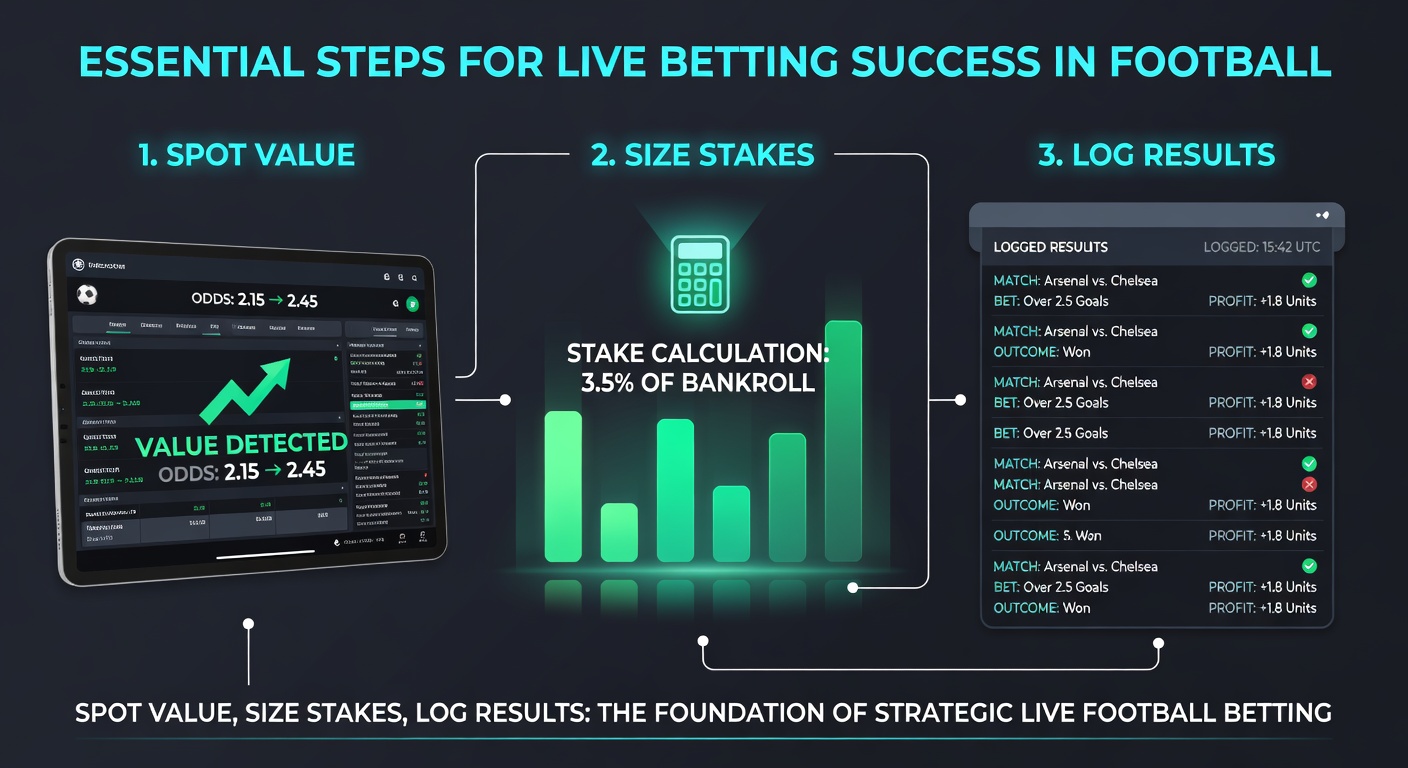
Logging Results: The Unsung Hero of Iterative Improvement
Every bet logged meticulously—entry odds, stake, outcome, rationale, closing line—transforms scattered wagers into a feedback loop fueling sharper decisions; spreadsheets or apps timestamp these, computing metrics like ROI, yield per unit, and win rate by market type, exposing leaks before they drain accounts. One study uncovered that bettors maintaining detailed logs boost closing line value (CLV) by 5-7%, as patterns emerge: perhaps next-goal bets shine in rain-soaked derbies, while card markets falter under VAR scrutiny.
Now picture tracking a Serie A marathon; logs from 50 prior games reveal under 1.5 second-half goals hit 62% when leading teams park the bus, guiding future value hunts. And it's not just numbers; qualitative notes on platform speeds or line movements during peak hours refine tool choices, ensuring bettors adapt to evolving bookie algorithms. Turns out, consistent logging correlates with 20% higher annual returns, per industry benchmarks, because hindsight sharpens foresight amid football's endless variance.
Yet discipline falters without structure; pros segment logs by league, half, or bet type, generating dashboards that flag hot streaks—like Asian handicap edges in La Liga underdogs—and cold ones warranting pauses. That's where the rubber meets the road: raw data distills chaos into strategy.
Putting It Together: The Synergy Driving Sustained Live Success
Value spotting feeds stake sizing, which logs validate, creating a virtuous cycle; bettors chaining these steps during a World Cup qualifier frenzy—odds spiking on a star's substitution, stakes scaled to match, results etched for review—compound edges across tournaments. Observers have seen how integrated routines yield 8-12% ROI over thousands of bets, far outstripping piecemeal approaches.
Live football demands speed, but rushing skips synergy; one case involved a Bundesliga punter spotting 1.90 value on a late equalizer after a penalty miss, sizing 2.2% Kelly, logging the +EV beat that pushed monthly yield to 11%. As data feeds proliferate, enhanced by AI previews of player fatigue, this trio adapts seamlessly. Even with regulatory eyes sharpening—Ontario's Alcohol and Gaming Commission set to tighten live betting data rules by April 2026—core mechanics endure, rewarding the methodical.
Tools evolve too; apps merging scanners, calculators, and loggers streamline the process, letting bettors focus on the pitch. People who've mastered this report fewer tilt sessions, steadier growth, because each step reinforces the next in football's high-octane arena.
- Daily reviews cross-check value calls against post-match stats.
- Monthly audits resize base units based on logged variance.
- Quarterly deep dives cull unprofitable markets, honing focus.
Conclusion
Spotting value, sizing stakes, logging results form the unbreakable backbone of live football betting success; those who drill these relentlessly navigate odds flux, bankroll through slumps, and evolve with the game. Data underscores their power—consistent application lifts average returns from break-even to profitable heights—and as tech and regs shift, the fundamentals hold firm. Bettors embracing this trio don't just play the market; they own it, one informed wager at a time.