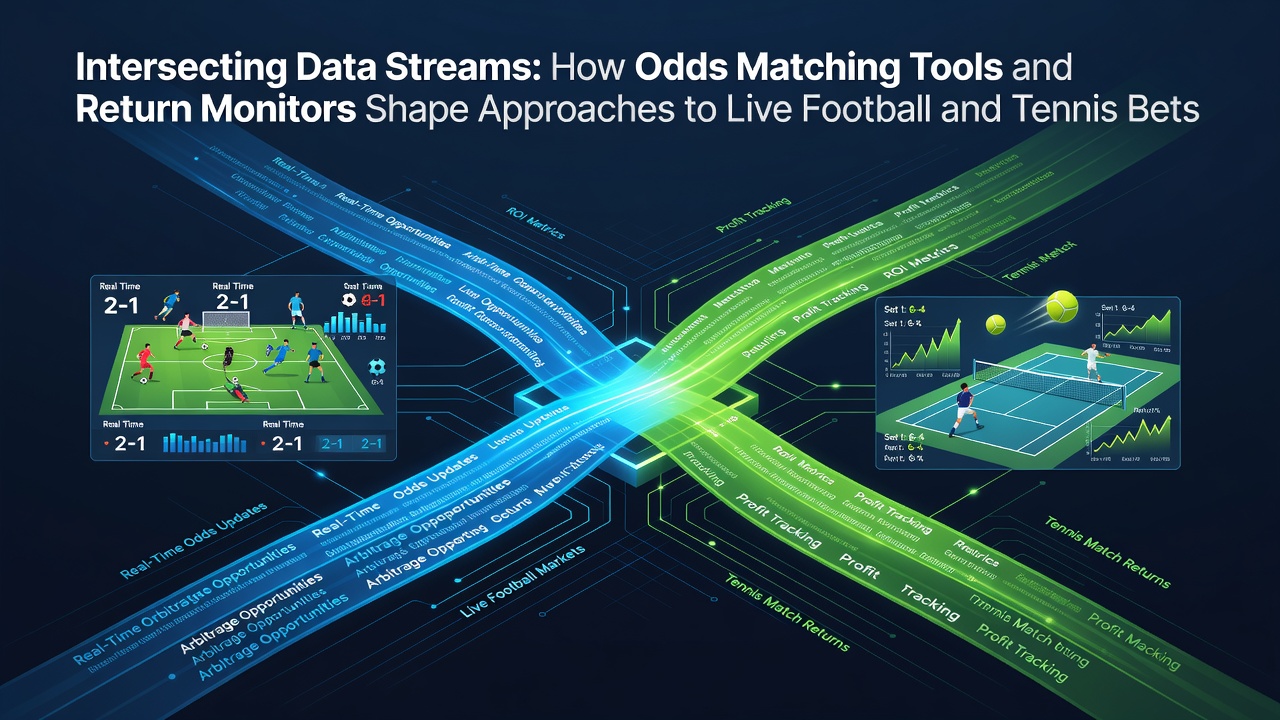
Intersecting Data Streams: How Odds Matching Tools and Return Monitors Shape Approaches to Live Football and Tennis Bets
Odds matching tools pull live prices from dozens of operators into a single view while return monitors track profit and loss across sessions in real time, and together these systems let bettors adjust stakes during matches in football and tennis without waiting for static pre-game lines to settle. Operators update in-play markets every few seconds during a Premier League match or an ATP semifinal, so the tools flag when one book shows a higher price on the same outcome than another, letting users lock in the better number before it moves.
Core Functions of Odds Matching Tools in Live Markets
Matching engines compare decimal, fractional and American formats across platforms simultaneously, highlighting discrepancies that last only seconds in volatile in-play tennis sets or football stoppage-time scenarios. A serve is broken in the fifth set of a Grand Slam match and multiple books adjust the next-game price within the same minute, so the tool surfaces the outlier price before the spread collapses. Data from the European Gaming and Betting Association shows that in-play turnover in major European leagues grew steadily through mid-2026, with operators reporting faster price updates during high-viewership events.
Return Monitors and Session-Level Tracking
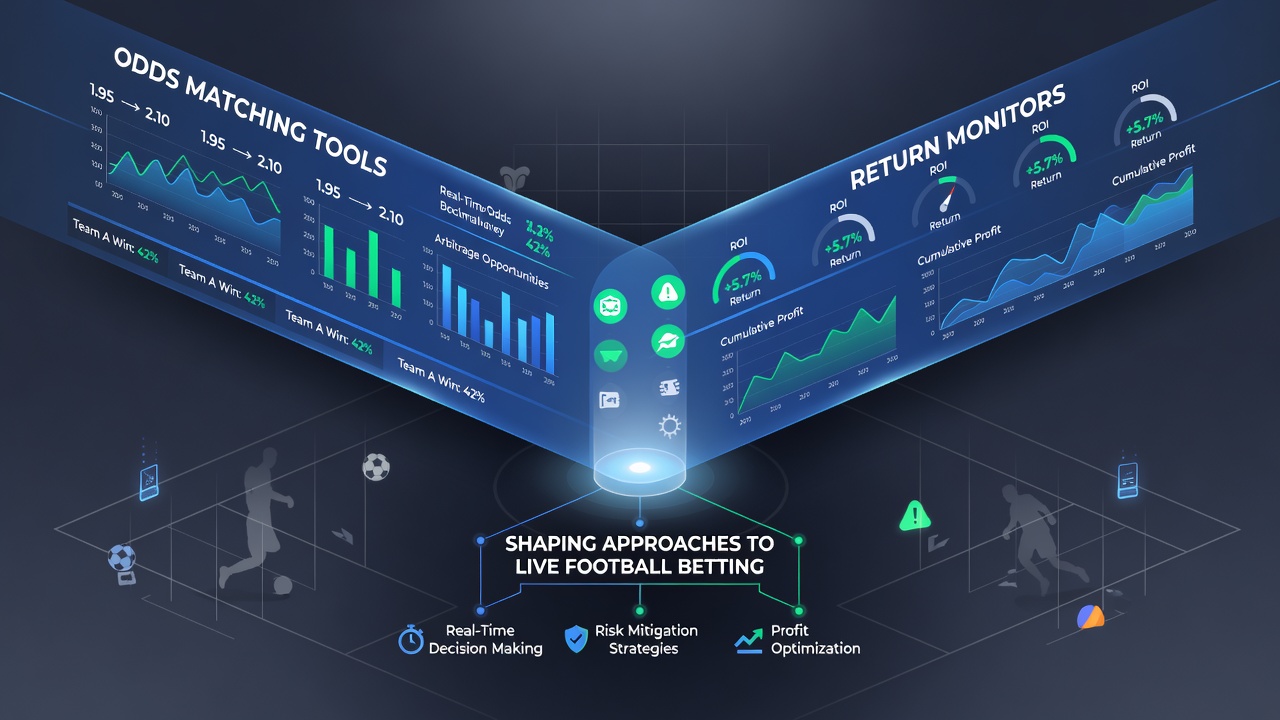
Return monitors record every settled bet against a running bankroll total, calculating yield and variance on the fly while live markets remain open. Users see at a glance whether a sequence of live corners in an English Championship game or a series of break-point conversions in a WTA final has pushed overall return above or below the session target. The monitor can trigger alerts when drawdown reaches a preset threshold, prompting smaller stakes on subsequent points or periods rather than manual spreadsheet checks between points.
Combined Workflow During Football Matches
In a live Premier League fixture the odds matcher first identifies a price difference on the next-goal market between two operators, then the return monitor shows the current session yield sitting at plus 4 percent after an earlier over-2.5 goal settlement. The bettor can size the new stake to maintain overall return targets without exceeding risk limits. Observers note that during July 2026 international windows, when fixture congestion increased live-bet volume, these combined systems reduced the time between identifying an edge and placing the wager from roughly 12 seconds to under 4 seconds on average.
Application in Tennis Rally and Set Markets
Tennis presents shorter decision windows because points end every 20 to 40 seconds on average. An odds matcher flags a discrepancy on the next-point winner while the return monitor confirms that the session remains within variance bands after three consecutive service holds. Bettors can therefore move on the higher price before the server steps up to the line again. Research published by the University of Nevada, Las Vegas gaming laboratory indicates that in-play tennis markets exhibit price volatility roughly 1.8 times higher than football during tie-break situations, making rapid matching essential for maintaining positive expected value.
Data Integration and Latency Considerations
Modern platforms feed both tools from the same API streams, so latency between price changes and monitor updates stays under 800 milliseconds for most major operators. When a goal is scored in added time the matcher refreshes the match-winner market instantly while the monitor recalculates cumulative return including the just-settled bet. Those who've studied platform performance during the 2026 European summer tournaments report that integrated feeds maintain accuracy even when traffic spikes coincide with multiple overlapping matches.
Regulatory Context and Market Access
Industry reports from the Australian Communications and Media Authority note that licensed operators must display clear settlement times for in-play bets, which indirectly supports the reliability of matching and monitoring tools used by account holders. Platforms operating under these rules provide timestamped price feeds that align with the requirements of both odds matchers and return monitors, reducing disputes over late fills during fast-moving tennis games or football counter-attacks.
Conclusion
Odds matching tools and return monitors operate as parallel data streams that converge at the moment a bettor decides on a live football or tennis wager. The matcher supplies comparative prices across books while the monitor supplies the running performance context, allowing adjustments that reflect both market movement and session targets. As data feeds continue to tighten and regulatory frameworks evolve, the intersection of these systems remains central to how live betting decisions are formed in both sports.