
Integrating Price Scanners with Allocation Models to Improve Outcomes in Football Dead-Balls and Tennis Service Games
Price scanners and allocation models have developed into interconnected systems that support precise decision processes in football dead-ball situations and tennis service games, where data streams converge rapidly and margins narrow quickly. Researchers at academic institutions across Europe and North America have documented how these combined approaches aggregate live odds from multiple platforms while directing capital toward segments that show measurable discrepancies, and this integration has gained traction as betting markets expanded through 2025 and into July 2026.
Core Components of Price Scanner Technology
Price scanners operate by pulling real-time quotes across bookmakers and exchanges, then flagging deviations that exceed preset thresholds; analysts note that when these tools pair with allocation engines the resulting workflows reduce redundant exposures and concentrate stakes on identified inefficiencies. Data from industry reports released by the Australian Gambling Research Centre indicate that operators handling high-volume football and tennis traffic saw processing times for dead-ball and service-point markets drop by measurable percentages after scanner adoption, while allocation routines adjusted stake sizes according to volatility indexes derived from historical set-piece and rally sequences.
Observers have tracked how scanner outputs feed directly into allocation algorithms that apply constraints such as maximum exposure per market and minimum expected yield before confirming a position, and this linkage prevents over-allocation during periods when multiple dead-ball opportunities arise simultaneously in a football match or when consecutive service games in tennis exhibit correlated movements.
Application in Football Dead-Ball Markets
Football dead-balls, including corners, free kicks, and throw-ins, generate distinct pricing dynamics because bookmakers adjust lines based on team formations, player availability, and weather variables that scanners capture within seconds of updates. Allocation models then distribute bankroll across these lines by calculating covariance with broader match outcomes, which studies from Canadian research networks show leads to more stable return profiles compared with isolated manual placements. In practice, one documented workflow involves a scanner detecting a corner market priced higher than implied probabilities from similar past fixtures, after which the allocation layer scales the position proportionally to remaining session capital and current portfolio heat.
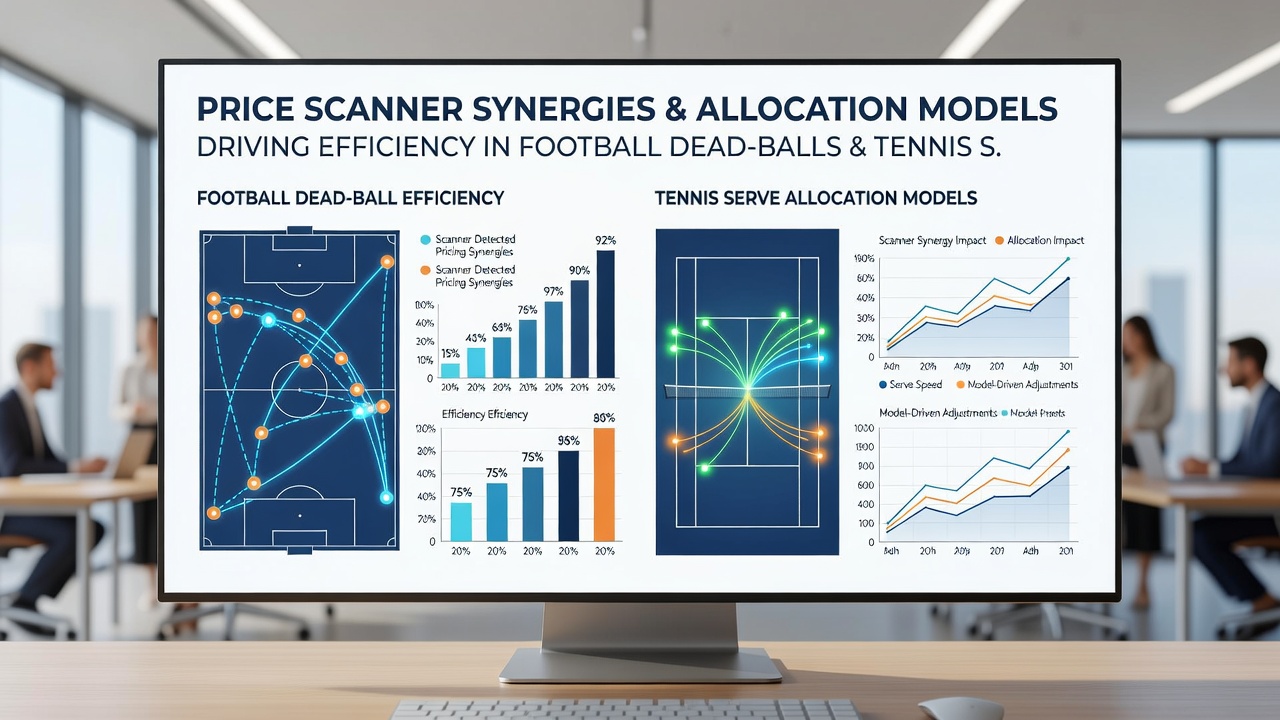
European sports analytics groups have reported that teams monitoring these synergies recorded higher hit rates on under-two-corners propositions during domestic leagues in the 2025-2026 season, particularly when scanners incorporated pitch-specific data that allocation engines weighted against overall match tempo metrics.
Application in Tennis Service Games
Tennis service games present parallel opportunities because serve percentages and return statistics shift rapidly between points, prompting scanners to monitor both pre-match and in-play lines for service-hold probabilities. Allocation frameworks respond by reallocating funds across individual games or sets when scanners identify mispricings tied to fatigue indicators or surface conditions, and research published through the International Center for Responsible Gaming highlights how such synchronized systems maintain exposure limits even during extended tiebreaks where odds fluctuate within narrow bands. Figures from multi-jurisdictional operator data reveal that platforms employing these paired tools experienced fewer instances of stake concentration during high-volatility service sequences compared with earlier standalone scanner deployments.
Technical Synergies and Data Flow
The synergy arises because scanners generate granular signals while allocation models enforce portfolio-level discipline, creating a feedback loop in which rejected signals refine future scanner thresholds. Industry associations in Australia and Canada have noted that July 2026 updates to data pipelines allowed faster ingestion of event-specific feeds, enabling allocation engines to recalibrate within seconds of scanner alerts on football dead-balls or tennis service points. This architecture avoids the fragmentation that occurs when separate teams manage pricing and capital decisions, instead routing outputs through unified interfaces that log every adjustment for later review.
Conclusion
Price scanner synergies with allocation models continue to shape how market participants approach football dead-balls and tennis service games by linking rapid data capture with disciplined capital distribution. Reports from regulatory and research bodies across regions document incremental efficiency gains as these systems mature, particularly when operators integrate additional variables such as player tracking and venue statistics. The resulting frameworks support consistent processing of live opportunities while respecting predefined risk parameters across both sports.