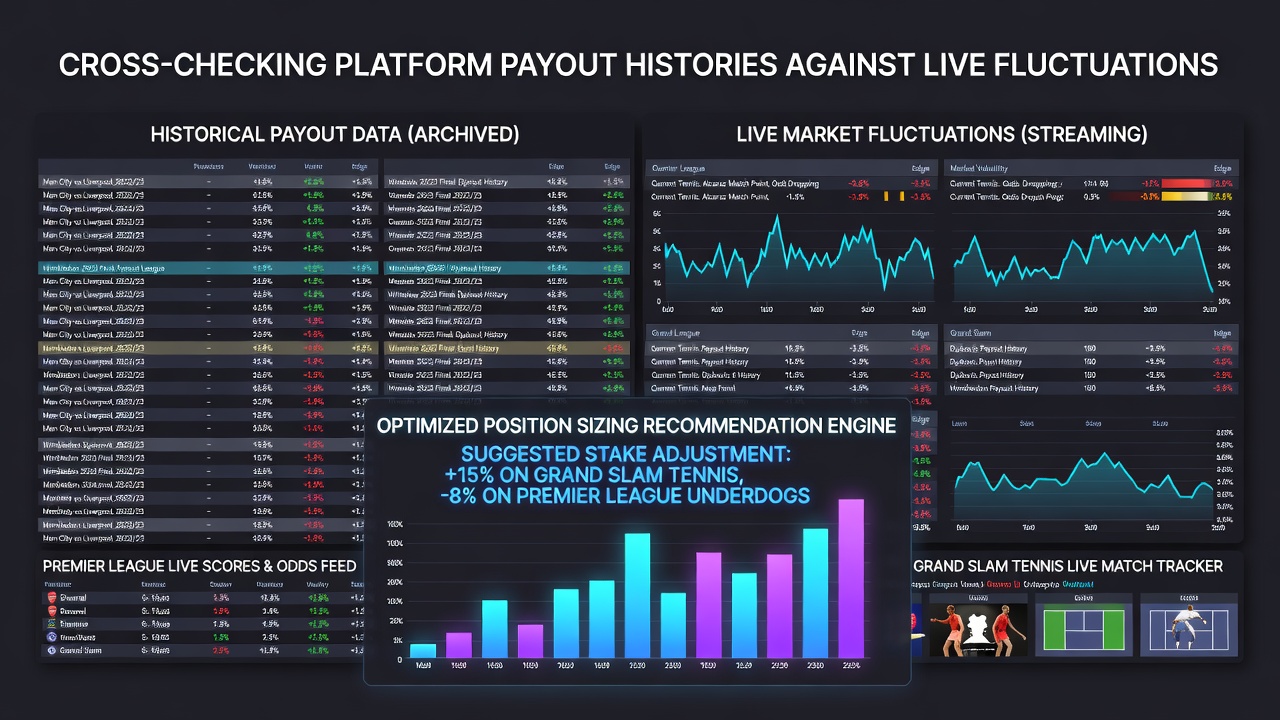
Aligning Platform Payout Records With Real-Time Odds Movements to Refine Stake Levels in Premier League Fixtures and Grand Slam Matches
Platform operators release detailed payout histories each quarter, and bettors cross-reference those figures against live odds shifts to adjust stake sizes before Premier League kickoffs or Grand Slam sets begin. Data from multiple operators shows payout percentages for match-winner markets often stabilize between 92 and 96 percent, yet intraday movements can widen or narrow those margins within minutes when team news or court conditions change.
Collecting and Organizing Payout Histories
Analysts pull quarterly reports from licensed platforms, then sort results by market type and event category. Premier League goal-line markets appear alongside Grand Slam set-betting lines, allowing direct comparison of average returns across thousands of settled wagers. Those who maintain running spreadsheets note that August 2026 data already includes early-season Premier League fixtures where payout rates dipped slightly after heavy rain affected several opening matches.
Sorting continues by time of day and by specific leagues or tournaments, which reveals patterns such as higher variance in late-evening Grand Slam sessions compared with afternoon Premier League windows. Observers record the figures without interpretation, simply logging the raw percentages and the number of bets settled in each category.
Tracking Live Fluctuations in Real Time
Live odds streams update every few seconds during matches, and software tools capture those changes while simultaneously logging the current payout percentage for the same market. When a Premier League side concedes an early goal, the odds on the opposing team shorten rapidly, yet the underlying payout history for that operator remains unchanged until the next settlement batch. Bettors therefore compare the live movement against the stored history to decide whether the current price still aligns with the platform's long-term return rate.
Grand Slam matches produce similar moments when a break of serve occurs or when weather delays interrupt play. The live price on the next game or set can swing several points while the historical payout record stays fixed, creating a window where position sizing can be recalibrated before the next point begins.
Cross-Checking the Two Data Streams
The process requires matching each live quote to the most recent payout history entry for that exact market. If the live odds imply a return higher than the stored average, some bettors increase the stake fraction; if the live figure falls below the historical benchmark, they reduce exposure or skip the wager. Software scripts automate the matching step, flagging discrepancies within seconds of each odds update.
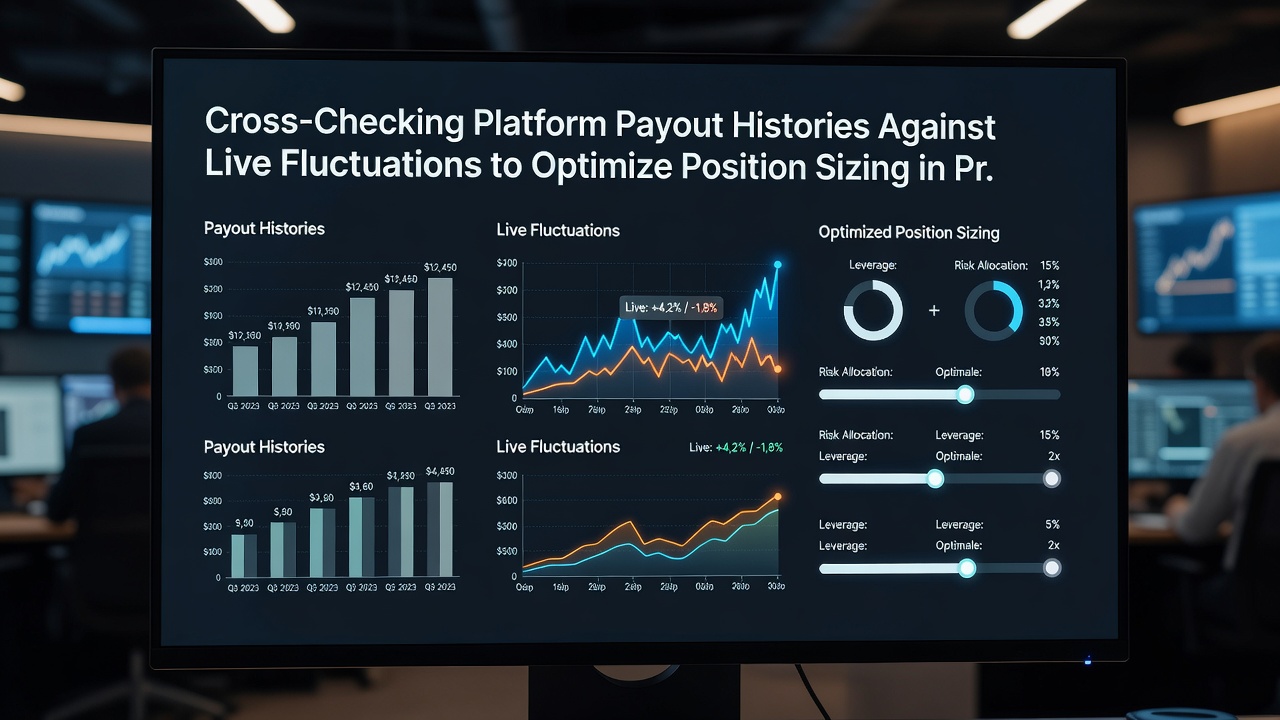
Those who run the scripts during August 2026 Premier League rounds report that the majority of flagged opportunities appear in the final fifteen minutes of halves when stoppage-time markets open. In Grand Slam play, similar flags cluster around tiebreaks and deciding sets where live prices move fastest.
Adjusting Position Sizes Based on the Comparison
Once a discrepancy is identified, the next step involves scaling the intended stake according to the size of the gap between live and historical figures. A narrow gap might prompt a modest increase, while a wider gap can justify a larger adjustment, always within pre-set bankroll limits. The calculation uses the stored payout percentage as the baseline and the live odds as the variable input.
Premier League corners and Grand Slam ace markets receive the same treatment, with separate payout histories maintained for each sub-market. This separation prevents cross-contamination of data and keeps sizing decisions specific to the event type.
Practical Examples From Recent Events
One documented sequence from an August 2026 Premier League fixture showed live odds on an over-2.5 goals market drifting from 1.85 to 1.92 within eight minutes after a red card. The platform's most recent payout history listed 94.3 percent for that market, so the software flagged the new price as favorable and the stake was increased by one-quarter of the normal unit size before the next kick.
A parallel Grand Slam example involved a women's semifinal where serve percentages shifted after a medical timeout. Live odds on the next-game winner moved from 1.65 to 1.78 while the historical payout remained at 93.8 percent. Position size was adjusted upward accordingly, and the wager settled within the same set.
Conclusion
Cross-checking payout histories against live fluctuations supplies a repeatable method for calibrating stake sizes in both Premier League and Grand Slam settings. The approach relies on organized historical records, continuous live data feeds, and straightforward arithmetic to translate observed differences into position adjustments. As more platforms publish quarterly figures and more events unfold through 2026, the same workflow continues to apply across additional fixtures and tournaments.