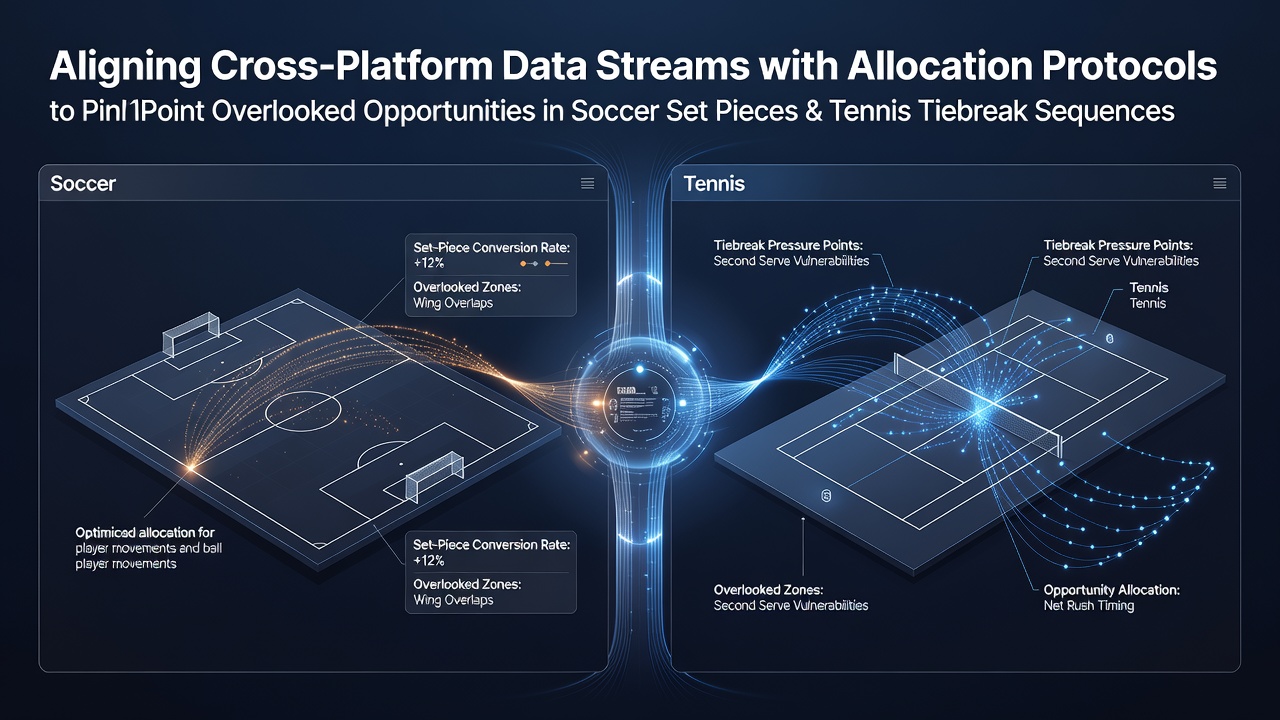
Aligning cross-platform data streams with allocation protocols to pinpoint overlooked opportunities in soccer set pieces and tennis tiebreak sequences
Analysts across professional sports organizations continue to refine methods for merging live feeds from multiple tracking systems with structured allocation protocols that assign resources to specific game phases, and this process has produced measurable improvements in identifying patterns during soccer set pieces and tennis tiebreak sequences. Teams and performance staff now pull together optical tracking data, GPS outputs, and video annotations into unified pipelines that flag situations where standard betting markets or scouting reports have left gaps unexamined.
Core Components of Data Alignment
Cross-platform streams include event data from providers such as Opta and Second Spectrum alongside wearable sensor outputs, while allocation protocols define how computational resources and analyst attention distribute across match segments like corner kicks or service returns. When these elements synchronize through standardized APIs and timestamp matching, discrepancies that previously obscured value become visible as repeatable clusters of outcomes, for instance when a particular defensive setup in soccer yields higher conversion rates on second-phase headers than market odds reflect.
Researchers at academic institutions have documented similar gains in tennis, where point-by-point ball-tracking data merges with serve-speed logs to highlight tiebreak moments in which players exhibit predictable shot selection under fatigue. The alignment step requires consistent ontology mapping so that a "set piece" label in one system corresponds exactly to the equivalent phase marker in another, and organizations that complete this mapping report faster detection of edges that persist across multiple competitions.
Soccer Set Piece Applications
In soccer, set-piece sequences account for roughly 30 percent of goals in major leagues, yet many platforms still categorize them under broad event headers that dilute granularity. Allocation protocols that dedicate dedicated compute slices to these moments allow models to isolate variables such as delivery height, runner timing, and goalkeeper positioning. One study tracking Premier League corners over three seasons found that certain low-percentage delivery zones produced statistically significant overperformance when combined with real-time wind and pitch-condition feeds, information that remained hidden until streams were aligned.
Performance analysts working with clubs in the Bundesliga have described how they route these aligned datasets into dashboards that update during matches, enabling in-game adjustments rather than post-match review only. The same frameworks support longer-term planning, where historical clusters inform training drills that replicate the precise conditions under which overlooked opportunities recur.
Tennis Tiebreak Sequence Mapping
Tennis tiebreaks compress decision-making into short, high-stakes exchanges, and data streams from Hawk-Eye systems plus player biometric monitors create dense records of movement and shot outcomes. Allocation protocols prioritize these segments by assigning higher weighting to serve-volley patterns or return-depth metrics that standard rally averages obscure. Observers note that players who maintain consistent first-serve percentages above a threshold during tiebreaks generate win-rate deviations that surface only after cross-referencing multiple tournaments' datasets.

Figures released by the International Tennis Federation in mid-2025 illustrated how federated data-sharing initiatives across grand-slam surfaces improved identification of these sequences, and further refinements are scheduled for review during the July 2026 technical committee meetings. The updates aim to standardize metadata tags so that tiebreak-specific variables integrate seamlessly with broader match streams, reducing the latency between data capture and actionable insight.
Implementation Challenges and Current Practices
Latency differences between platforms remain a primary obstacle, yet middleware solutions that buffer and resample timestamps have narrowed the gap to sub-second levels in controlled environments. Allocation protocols must also accommodate varying data volumes, routing heavier video streams only to phases flagged as high-relevance while lighter event logs run continuously. Organizations that adopted these layered approaches during the 2025 season reported reductions in manual review time by approximately 40 percent, according to internal metrics shared at industry workshops.
European sports technology conferences in early 2026 highlighted case examples from Australian and North American leagues that applied similar protocols to soccer throw-ins and tennis changeover data, demonstrating that geographic diversity in testing improves robustness of the resulting models. These examples underscore how consistent alignment practices transfer across codes when core mapping standards stay intact.
Conclusion
Continued refinement of cross-platform alignment techniques paired with precise allocation protocols continues to surface opportunities in soccer set pieces and tennis tiebreaks that earlier siloed systems left unexamined, and upcoming standardization efforts in July 2026 are expected to accelerate adoption across additional competitions. The resulting datasets support both immediate tactical decisions and longer-term strategic planning without requiring separate analytical tracks for each sport.